
Waiting Until 2027 for Solar Could Cost Your Business More: What Industries Need to Consider Before Delaying

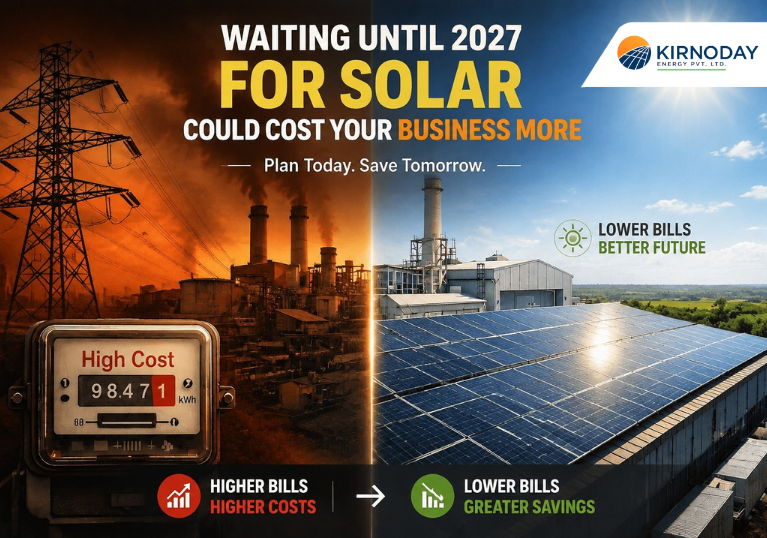
Many businesses wait for the “right time” to invest in solar, expecting prices to become more attractive in the future. But while you wait, your electricity bills continue, your savings opportunity gets delayed, and the overall economics of your solar project can change.
For industries, the decision is not simply about whether solar panels will cost less tomorrow. The bigger question is whether waiting will actually create more savings or simply delay the benefits your business could already be enjoying.
Factories, manufacturing units, warehouses, and commercial facilities are among the highest consumers of electricity. With increasing operational costs and growing focus on energy efficiency, solar power has become a strategic investment for businesses looking to control expenses and build long-term energy security.
However, delaying your solar project until 2027 may introduce several factors that can influence your investment, including changing module standards, technology updates, installation demand, and overall project economics.
Your Factory’s Electricity Bill Won’t Wait Until 2027
One of the biggest mistakes businesses make while planning solar is focusing only on future installation costs while ignoring the ongoing cost of electricity.
Every month without solar means your business continues depending completely on grid electricity. The money spent on electricity bills becomes a recurring operational expense instead of an investment that creates long-term value.
A solar system changes this approach by turning your unused rooftop space into an energy-generating asset that can continue delivering benefits for decades.
For industries with high electricity consumption, even a few months of delay can mean losing valuable savings opportunities.
This is why businesses are increasingly exploring industrial solar solutionsnot just as a renewable energy option, but as a long-term strategy to reduce electricity expenses and improve energy independence.
Solar Project Costs Depend on More Than Just Panel Prices
- Solar modules
- Inverters and electrical equipment
- Mounting structures
- Engineering and design
- Installation labour
- Project execution
- Compliance requirements
- Compliance requirements
Changes in any of these areas can influence the final investment required for your project.
Since industrial solar projects involve detailed technical planning, working with an experienced solar EPC companyhelps businesses ensure proper system design, quality execution, and better long-term performance.
Choosing solar should not only be about finding the lowest upfront price. The focus should be on building a system that delivers maximum value throughout its operating life.
What Could Change If You Delay Your Solar Project Until 2027?
Solar Module Compliance Requirements May Influence Project Planning
Solar technology continues to evolve with increasing focus on quality, efficiency, and reliability.
Future solar projects may require businesses to pay closer attention to module selection, manufacturer credibility, and compliance standards.
For industrial buyers, this means solar decisions will become more strategic. Companies will need to evaluate not only initial costs but also long-term performance, reliability, and return on investment.
Selecting the right technology and planning ahead can help industries avoid unnecessary challenges during execution.
Growing Industrial Solar Demand Could Affect Project Execution
Solar adoption among industries is increasing as businesses look for ways to reduce electricity costs and improve sustainability.
As demand grows, factors such as equipment availability, installation schedules, and project execution timelines can influence how quickly businesses can complete their solar projects.
Industries planning their transition towards renewable energy are increasingly considering rooftop solar systems for industriesto convert available factory spaces into reliable power-generating assets.
Planning early gives businesses more flexibility in selecting the right solution without rushing their investment decisions.
Technology Improvements May Not Always Mean Lower Investment
Many businesses assume that waiting will automatically make solar cheaper. While technology improvements can increase efficiency, overall project costs depend on several factors.
Newer technologies may provide better performance, but equipment availability, demand, compliance requirements, and installation conditions also influence final costs.
The objective should not simply be to install solar at the lowest price. It should be to create a reliable energy system that continues generating value for years.
The Hidden Cost of Waiting for Solar
The biggest cost of delaying solar is often not the installation expense. It is the opportunity lost during the waiting period.
Lost Electricity Savings
A solar system starts creating financial value from the day it begins generating electricity.
Every month of delay means businesses continue paying electricity bills instead of producing their own clean power.
Delayed Return on Investment
Solar is a long-term business investment. The earlier a system starts operating, the sooner businesses begin recovering their investment through electricity savings.
Continued Dependence on Grid Electricity
Energy costs can change over time. Businesses depending completely on traditional power sources have less control over future operational expenses.
Solar gives industries greater control over energy planning and long-term cost management.
Why Industries Are Choosing Solar as a Business Investment
Modern businesses are no longer looking at solar only as an environmental initiative. They are viewing it as a practical business decision.
A properly designed solar power system can help industries:
Reduce Electricity Expenses
Improve Cost Predictability
Solar helps companies manage future energy expenses by creating a more predictable power source.
Support Sustainability Goals
Adopting renewable energy helps industries reduce their carbon footprint while building a stronger sustainability profile.
Why Choosing the Right Solar Partner Matters
Installing solar panels for an industrial facility requires technical expertise, accurate planning, and professional execution.
A reliable solar partner helps businesses with:
- Site evaluation
- System design
- Component selection
- Installation management
- Performance optimization
- Long-term support
Kirnoday Energy helps industries transition towards clean energy with customized industrial solar installation solutions designed according to their electricity requirements and business goals.
From understanding energy consumption to executing complete solar projects, Kirnoday Energy supports businesses in building efficient and reliable solar systems.
How Businesses Can Make the Right Solar Decision
Before investing in solar, industries should evaluate:
Current Electricity Consumption
Understanding your current power usage helps determine the right solar system capacity.
Available Rooftop Space
Large factory rooftops can become valuable energy assets with proper planning and system design.
Future Business Requirements
Planning solar according to future expansion ensures the system continues delivering value as business needs grow.
A professional solar assessment helps businesses understand their potential savings and make informed investment decisions.
The Smartest Time to Evaluate Solar Is Before Waiting Becomes Expensive
Waiting for the perfect time can sometimes delay the benefits that matter the most.
For industries, solar is not just about reducing electricity bills. It is about creating a reliable energy strategy for the future.
While 2027 may bring changes in technology, regulations, and market conditions, businesses that start planning early can make smarter decisions and avoid unnecessary uncertainty.
Your factory rooftop has the potential to become a long-term energy asset. The right time to explore that opportunity is before waiting starts affecting your savings.
If your business is evaluating solar as a long-term energy solution, Connect with Kirnoday Energy to explore a solar system designed around your industrial requirements.
Frequently Asked Questions (FAQs)
1. Is waiting until 2027 a good idea before installing solar?
Waiting may delay electricity savings and expose businesses to future changes in technology, compliance requirements, and market conditions. Industries should evaluate their solar requirements before making a decision.
2. Will solar panel prices decrease in the future?
Solar prices depend on multiple factors including technology, supply chain conditions, regulations, and market demand. Future pricing cannot be predicted with certainty.
3. What factors affect industrial solar project costs?
Industrial solar costs depend on system size, solar modules, equipment quality, installation requirements, engineering, and project complexity.
4. Why should factories invest in solar energy?
Solar helps factories reduce electricity expenses, improve energy independence, and create long-term savings.
5. How long does an industrial solar system last?
A professionally installed solar system can provide reliable performance for 25 years or more with proper maintenance.
6. What is the ROI period for industrial solar projects?
ROI depends on electricity consumption, system size, location, and project cost. A detailed solar assessment can provide accurate estimates.
7. How can Kirnoday Energy help industries install solar?
Kirnoday Energy provides customized solar solutions, professional installation support, and complete project execution for industrial and commercial businesses.